
When forming the initial plan to launch AuraLink as an outlet to boost small artists (and later to help them launch their early forays into merchandise), I knew from the beginning that social media content was going to be at the core of what drove growth. The original pitch was to “bridge the gap between traditional music journalism and modern short-form content” by adapting articles directly into more consumable bite-sized media. Over the course of the year of running the project (at the time of writing this in late September 2026) we’ve iterated and evolved our content strategy, looking at what works and what doesn’t, and learning how to optimize our workflow.
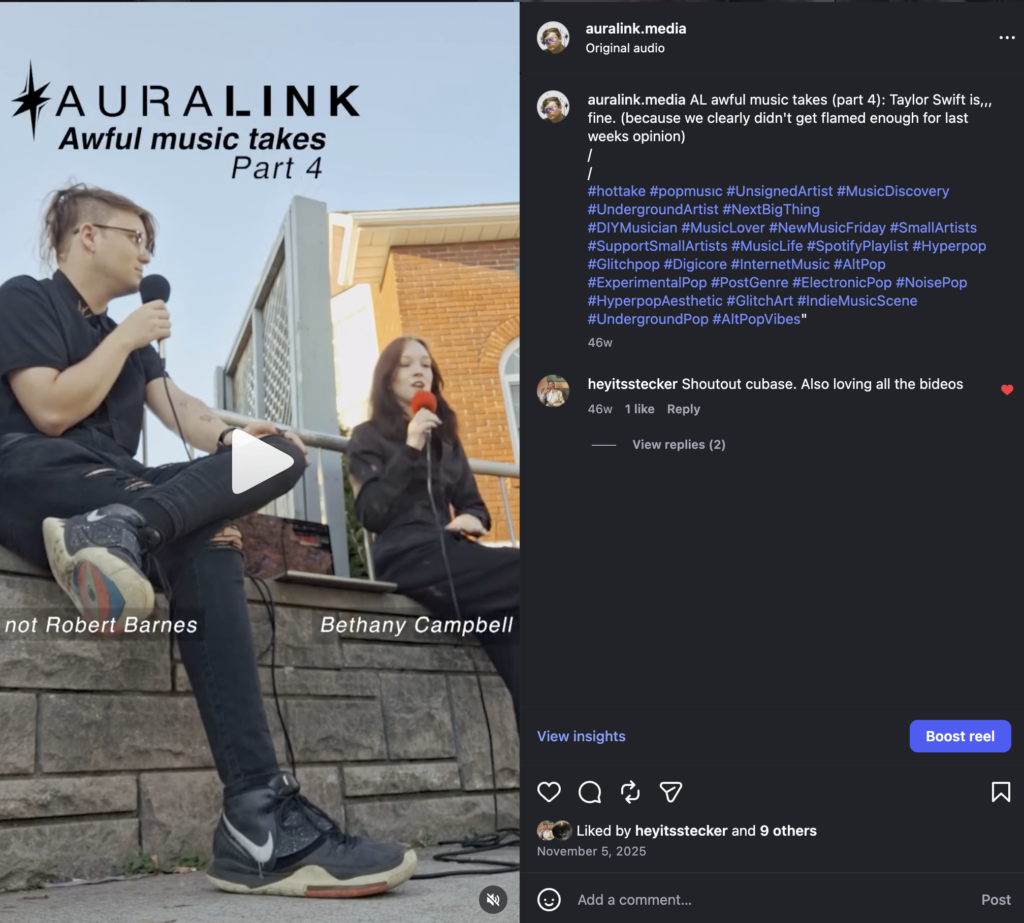
Early on we experimented with content we viewed would drive engagement, shooting hot takes with a dual cam setup to keep a higher production value feel to the whole thing. Unfortunately what we came to realize with time was that even when these videos drove far superior engagement than our other content, it varied wildly from video to video and there was zero carry over to the rest of what we did. We realized that the biggest issue was brand allignment. It didn’t make sense to be talking about Taylor Swift when our real goal is to be promoting smaller, niche artists with completely different target audiences. To remedy this we re-evaluated this approach with our new found experience under our belt and began something that still encouraged interaction, kept the dynamic between myself and my co-host that people had liked, and had far better brand alignment: Blind Rate.
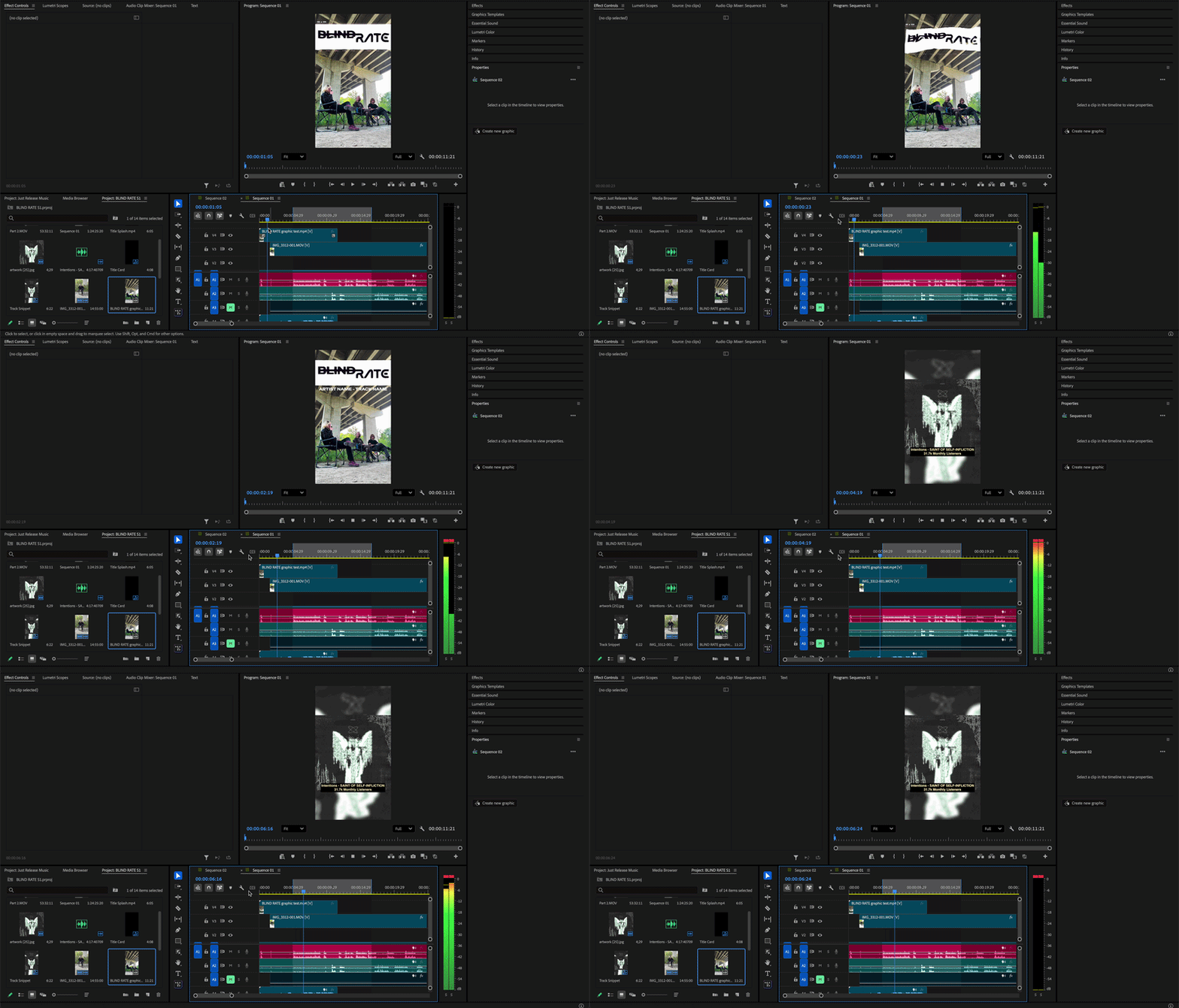
Blind Rate (a play on the phrase blind date) is an content series we’re developing in which we drive engagement by having my co-hosts who are unfamiliar with this niche of music blindly rate music from the artists we cover on AuraLink based on only the title of the song. After providing a rating they will then listen to the song and see if they change their opinions. The thought is that it will spark discussion based on peoples opinions in the comments, but has a direct tie in to our core messaging and content. Leveling up from the shooting of the Bad Takes content, we’re moved to a 3 cam setup and improved usage of rendered motion graphics to up the premium feel of the content. This kind of content has generally worked well for AuraLink on account of the fact that despite being a bit more work to edit, the process can be streamlined, produce a high quality result, and months of weekly content can be shot in a single shoot day, which is incredibly helpful when trying to run all the aspects of AuraLink in tandem with finishing my degree.
Through our time running the social we looked a lot at content like “Subway Takes” and “The Career Ladder” and took note of the fact that their crisp audio, usage of clean motion graphics, and good camera work all come together to set those pieces of content a cut above that of the average influencer. As such we began to apply that methodology to all of our content (with the only exception being “New Music Friday” posts which prioritize being available as fast as possible to be on the cutting edge of coverage).
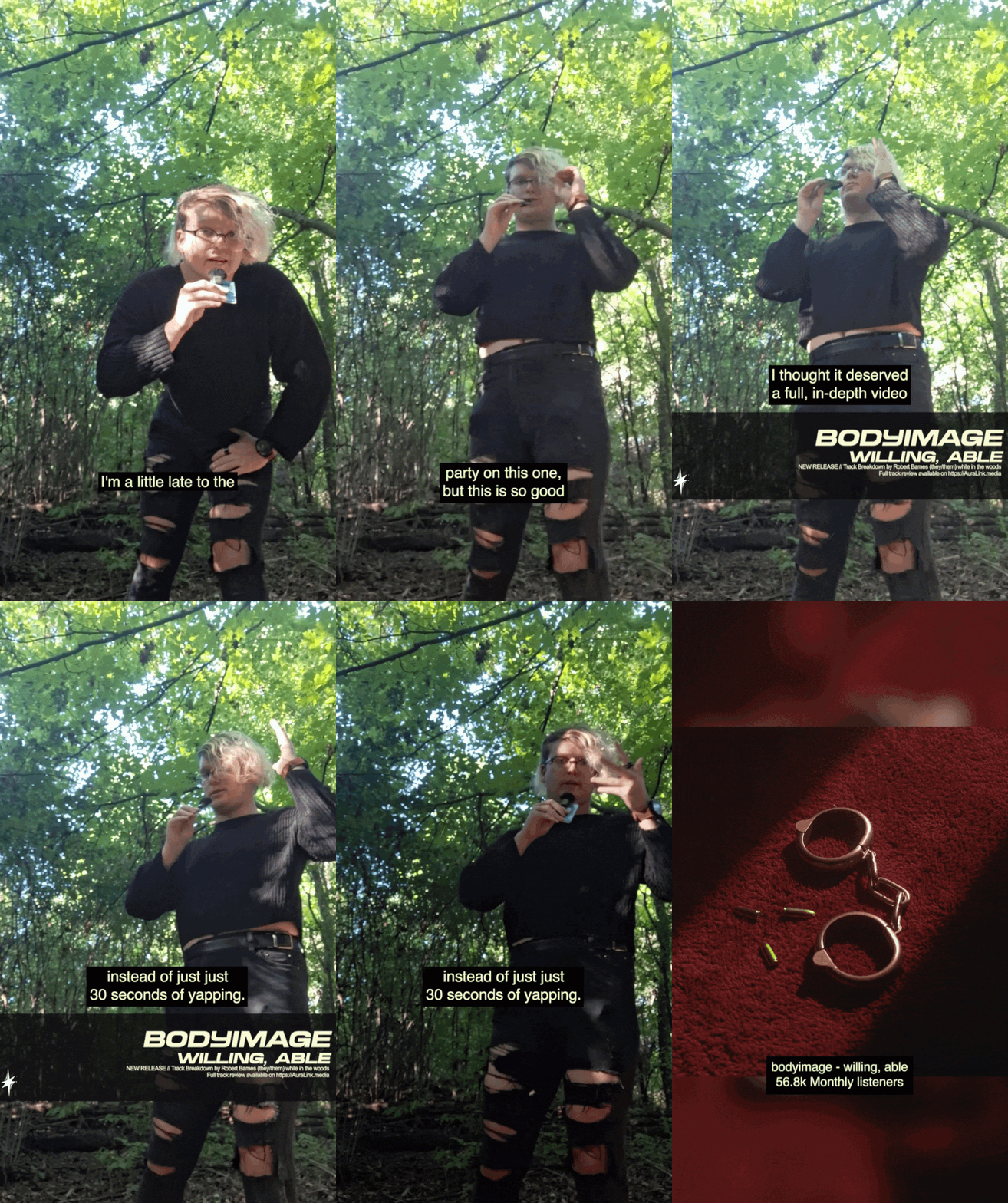
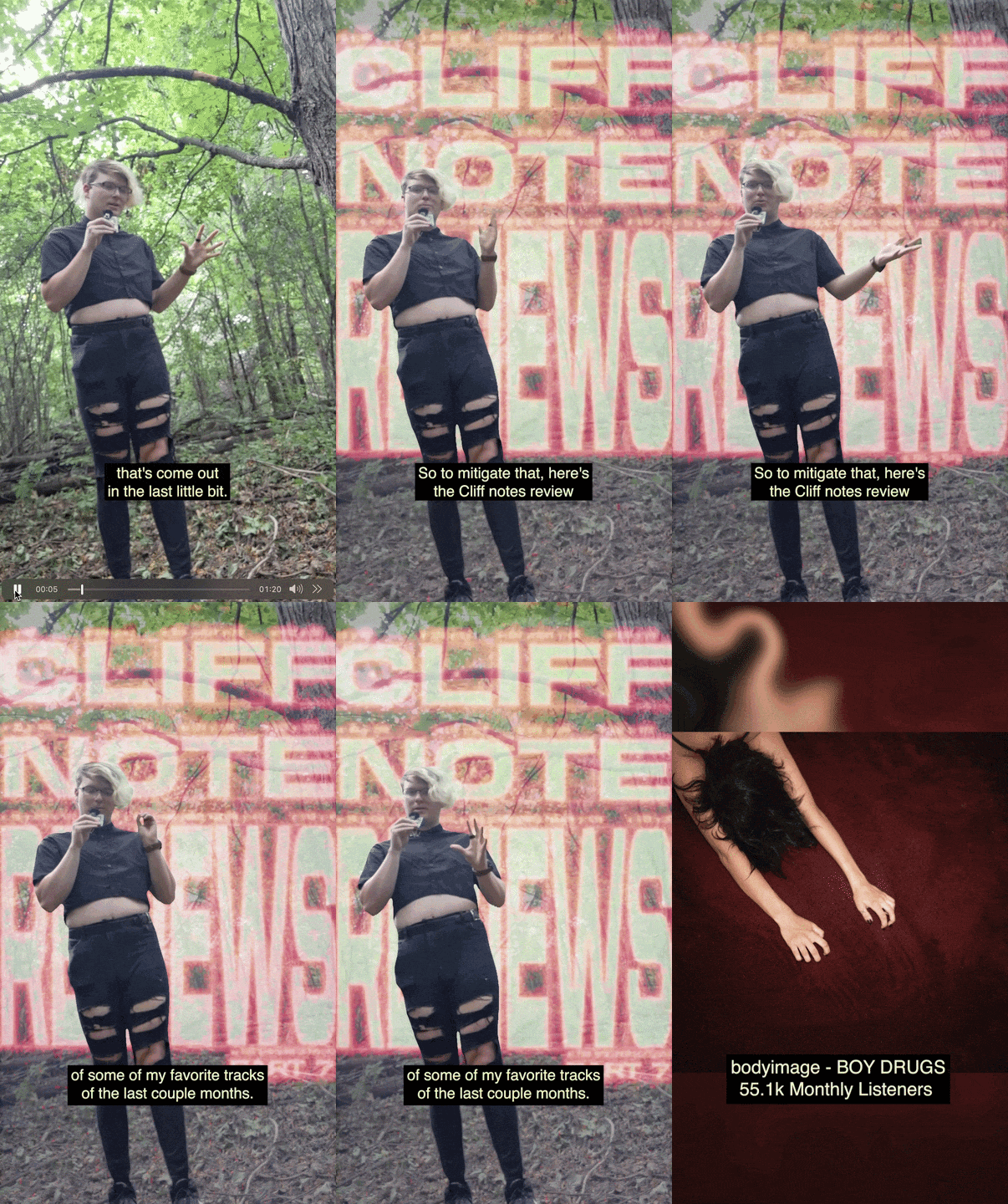
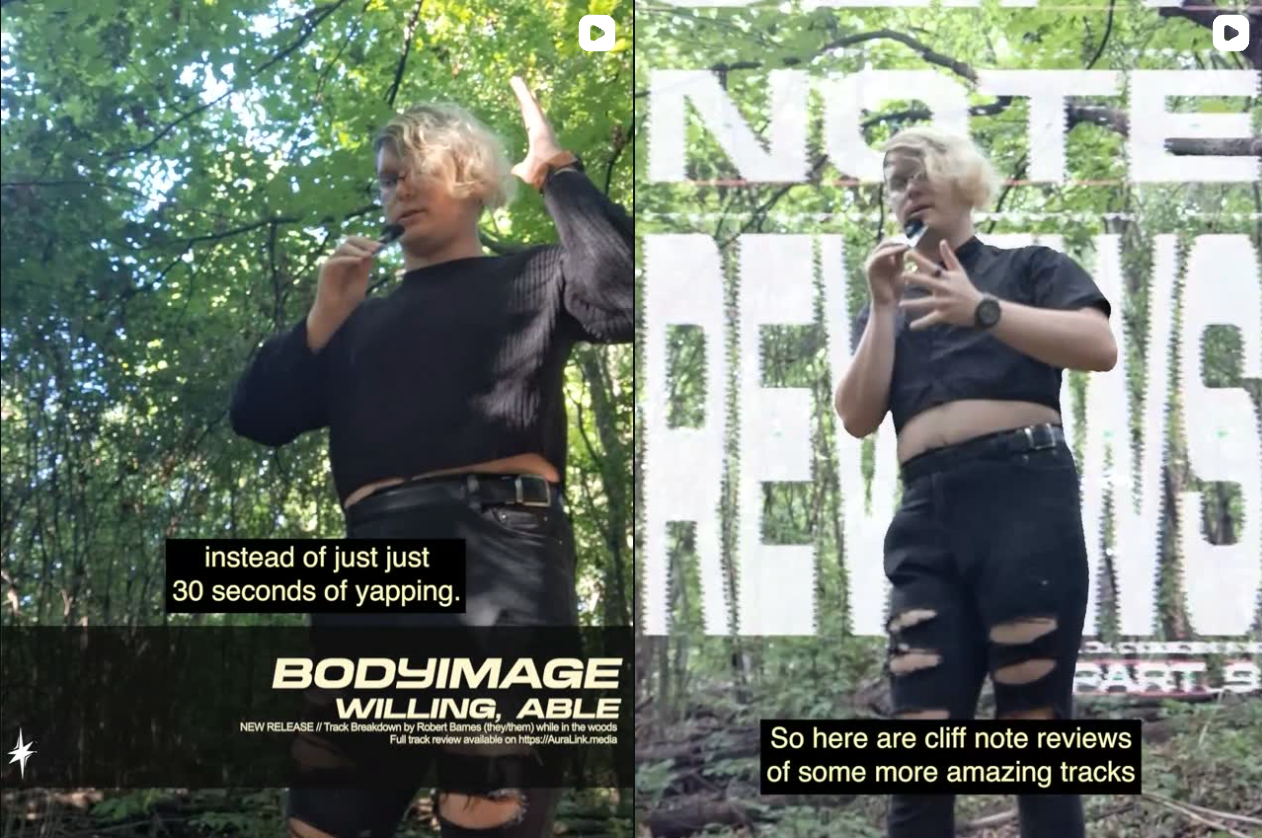
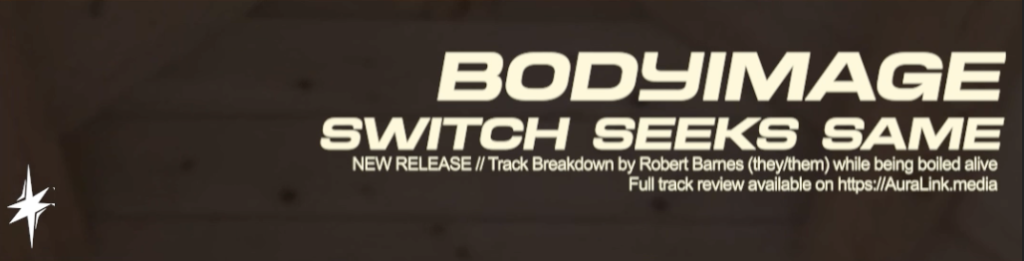
For our Cliff Note Reviews series we created a large (and continuing to grow) range of motion graphics using the same text template, making them all visually eye catching but unique from eachother (making enough that we can repeat title cards, but it will be infrequently enough to not be particularly noticable). For our more in depth review series we used a simpler but clean intro card with the artist, track name, and some additional small text, originally serving just as additional usage of space to add to the professional look of it all, but in practice it provided both an intro to the presenter, a bit of character and fun in the brand voice, as well as a call to action in the bottom line directing to the full length review available on the website.
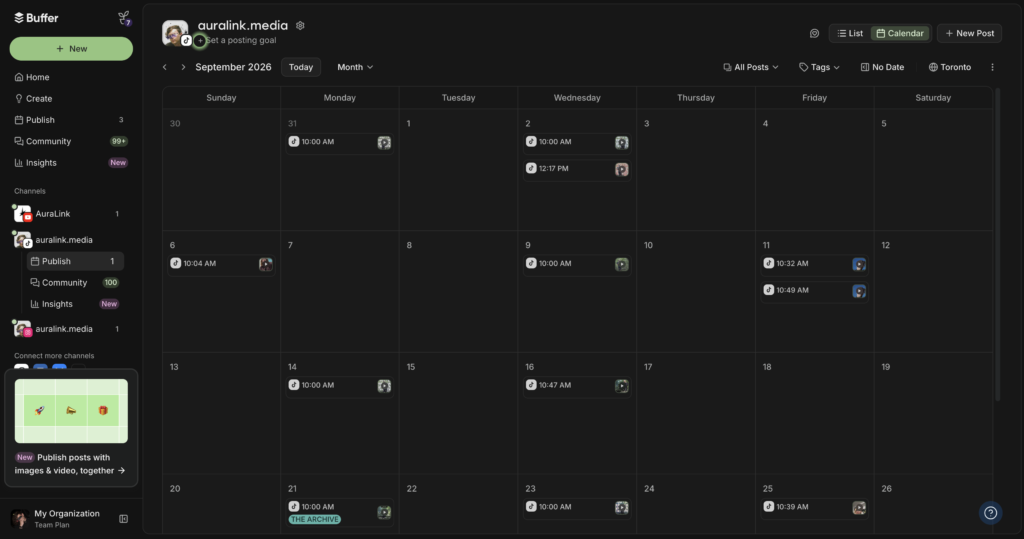
To keep everything organized and easy to keep track of Buffer has been our social media managment software of choice. While there are bigger and more featureful alternatives like hootsuite, Buffer offered a content calander, centralized engagement interaction, and data analystics all at zero cost to AuraLink in our early stages as a company. The data gathered through here has been key to us shaping our content strategy, seeing not just what draws in engagement but what draws in the most positive engagement and what reaches the right people.
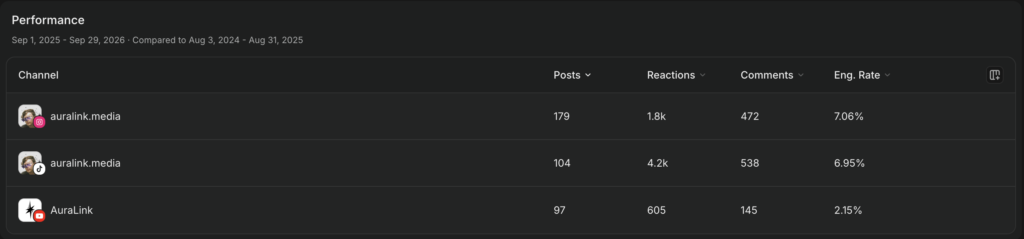
The next large thing on our plate is to re-evaluate our social media keywords and hashtags, as well as using that data to review our caption templates. With the way the social media landscape is constantly changine (as well as how different things can be platform to platform) there will need to be a lot of research and A/B testing to optimize and find what works best, but overall within a single year we’ve amassed a strong foundation to built upon moving forward.